August 2, 2026
Understanding Global Oil Market Vulnerabilities Through Historical Context
Energy security has never been more critical than in today's interconnected global economy, where complex supply chains span continents and geopolitical tensions can instantly disrupt decades of established trade patterns. The modern oil market operates through an intricate web of production centers, transportation chokepoints, and distribution networks that have evolved over generations to prioritize efficiency over resilience. This delicate balance faces unprecedented stress when regional conflicts intersect with strategic energy infrastructure, creating cascading effects that ripple through every sector of the global economy.
The current landscape of global oil supply chain issues reflects deeper structural vulnerabilities that have accumulated over decades of just-in-time logistics and geographical concentration of critical resources. Understanding these dynamics requires examining both the immediate triggers of supply disruptions and the underlying market mechanisms that amplify their impact across interconnected energy systems.
When big ASX news breaks, our subscribers know first
What Are the Primary Drivers Behind Current Global Oil Supply Chain Disruptions?
The Geopolitical Catalyst: Middle East Conflict Escalation
Regional conflicts in energy-producing areas create immediate market disruptions through multiple pathways that extend far beyond the direct impact on local production facilities. The strategic positioning of major oil reserves in geopolitically unstable regions has created a fundamental vulnerability in global energy security that markets have historically underpriced during periods of relative calm.
Historical precedents demonstrate the magnitude of market disruptions possible when geopolitical tensions escalate in key energy regions. The 1973 Arab Oil Embargo reduced global oil supplies by approximately 5 million barrels per day, triggering price increases from $3 to $12 per barrel and causing widespread economic disruption across oil-importing nations. Similarly, the 1979 Iranian Revolution removed 5.6 million barrels per day from global markets, contributing to oil prices rising from $13 to $34 per barrel between 1979 and 1981.
The 1990-91 Gulf War provided another critical case study, with Iraq and Kuwait's combined production of approximately 4.3 million barrels per day temporarily removed from global markets. These historical examples illustrate how regional conflicts can eliminate substantial production capacity within short timeframes, forcing global markets to rapidly adjust supply sources and transportation routes.
Critical Infrastructure Under Siege
Energy infrastructure represents high-value targets during regional conflicts due to their strategic importance and economic impact potential. Modern oil production and processing facilities require complex, interconnected systems that can take months or years to fully restore once damaged, creating extended periods of reduced capacity even after hostilities cease.
The vulnerability of energy infrastructure extends beyond production facilities to include:
• Processing complexes that refine crude oil into transportation fuels and petrochemical feedstocks
• Loading terminals that connect land-based production to maritime transportation networks
• Pipeline networks that transport crude oil and refined products across regions
• Storage facilities that provide buffer capacity for managing supply and demand fluctuations
Recovery timelines for damaged energy infrastructure depend heavily on the extent of damage, availability of specialised equipment and expertise, and the security environment for reconstruction efforts. Major refinery complexes can require 12 to 24 months for full restoration, while offshore production platforms may need 18 to 36 months depending on the severity of damage and water depth considerations.
How Has the Strait of Hormuz Closure Transformed Global Oil Flows?
The 20% Solution: Understanding Hormuz's Market Dominance
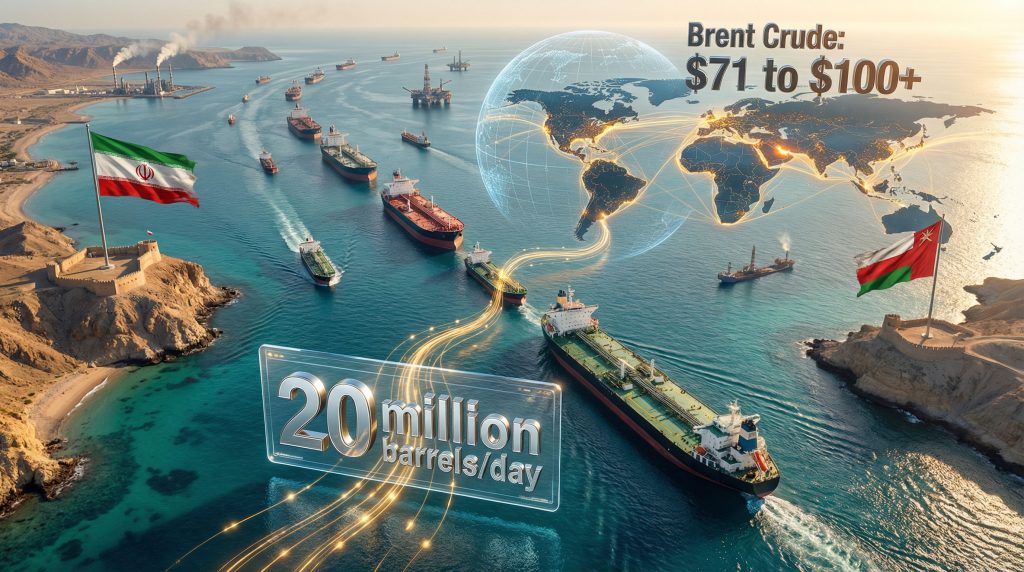
The Strait of Hormuz represents the world's most critical energy chokepoint, with approximately 21% of global petroleum liquids passing through this narrow waterway under normal operating conditions. This geographic concentration creates systemic risk for global energy markets, as alternative transportation routes cannot immediately absorb the full volume of displaced shipments.
Daily Oil Flow Analysis
| Route Category | Normal Capacity (Million bbl/day) | Alternative Capacity | Capacity Gap |
|---|---|---|---|
| Strait of Hormuz | 20.5 | – | – |
| Suez Canal/SUMED | 6.2 | 6.2 | 14.3 |
| Turkish Straits | 2.4 | 2.4 | 11.9 |
| Panama Canal | 0.8 | 0.8 | 11.1 |
| Total Alternative Routes | 9.4 | 9.4 | 11.1 |
This analysis reveals that existing alternative maritime routes can absorb less than half of the normal Hormuz throughput, creating an immediate supply gap that must be addressed through reduced consumption, increased production from other regions, or strategic reserve releases.
Rerouting Economics: The New Geography of Oil Transport
Alternative shipping routes for Middle Eastern oil involve significantly longer distances and higher transportation costs, fundamentally altering the economics of global oil trade. Shipments that would normally transit Hormuz must instead navigate around the Cape of Good Hope, adding approximately 3,500 nautical miles to voyages destined for Asian markets.
The economic impact of rerouting extends beyond simple distance calculations to include:
• Voyage duration increases of 15-20 days for major trade routes
• Charter rate premiums due to reduced vessel availability and increased demand
• Insurance surcharges for vessels operating in conflict-affected regions
• Fuel cost increases from longer distances and potential inefficient routing
These cost escalations ultimately translate into higher delivered prices for crude oil and refined products, with the burden falling most heavily on regions with limited domestic production capacity and few alternative supply sources. Furthermore, these developments contribute to broader oil price trade war dynamics affecting global markets.
U.S. Shale Response Limitations
United States shale oil production has provided increased flexibility for global supply response, but faces practical limitations that prevent immediate large-scale increases during supply emergencies. Current U.S. production levels near 13 million barrels per day represent significant utilisation of existing infrastructure and drilling capacity.
Constraints on rapid production increases include:
-
Drilling rig availability and experienced workforce limitations
-
Pipeline capacity constraints in major shale basins
-
Time lag factors of 3-6 months from drilling decision to first production
-
Financial capital requirements for accelerated drilling programs
-
Environmental permitting processes that cannot be expedited during emergencies
These limitations mean that while U.S. shale production can contribute to medium-term supply adjustments, it cannot provide immediate replacement for lost Middle Eastern production during acute supply disruptions.
What Market Mechanisms Are Amplifying Supply Chain Stress?
OPEC+ Strategic Positioning in Crisis Markets
The Organisation of Petroleum Exporting Countries and its allies (OPEC+) maintain significant influence over global oil supply through coordinated production management policies that can either mitigate or amplify supply disruptions from other sources. The alliance's approach during supply crises reflects complex balancing of member country economic interests with broader market stability considerations.
OPEC+ Production Management Framework:
The OPEC+ alliance coordinates production levels among 23 oil-producing nations, controlling approximately 40% of global oil production and maintaining 60% of global crude oil reserves. This market position provides substantial influence over global pricing and supply availability during crisis periods.
Historical precedent suggests OPEC+ responses to supply disruptions vary significantly based on:
• Spare capacity availability among member nations
• Political relationships with affected regions
• Price objectives for member country budget requirements
• Market share considerations in key importing regions
During the 2019 attacks on Saudi Aramco facilities, OPEC+ initially maintained existing production quotas before gradually adjusting output to stabilise markets. This measured response pattern reflects the alliance's preference for managed price appreciation over rapid market intervention, often leading to oil price stagnation in the short term.
Price Discovery in Disrupted Markets
Oil price formation during supply disruptions involves complex interactions between physical market tightness, financial market speculation, and policy responses from consuming nations. The benchmark Brent crude pricing mechanism incorporates risk premiums that can persist long after immediate supply threats resolve, reflecting market participants' assessment of ongoing vulnerability.
Components of crisis-period pricing include:
• Physical supply shortage premiums reflecting immediate availability constraints
• Geopolitical risk premiums for potential future disruptions
• Financial market volatility from speculative trading activity
• Policy response uncertainty regarding government intervention timing and scale
Forward curve analysis during supply disruptions typically shows backwardation patterns, where near-term prices exceed longer-term contracts, reflecting market expectations that current supply constraints will eventually resolve through increased production or demand destruction.
Emergency Reserve Deployment Strategy
Strategic petroleum reserves maintained by consuming nations provide critical buffer capacity during supply emergencies, but face limitations in terms of total volume, release rates, and coordination mechanisms between countries. The International Energy Agency coordinates reserve releases among member nations through established emergency response protocols, but individual country policies ultimately determine deployment timing and volumes.
Global Strategic Reserve Capacity:
| Country/Region | Reserve Volume (Million Barrels) | Maximum Release Rate (Million bbl/day) | Duration at Max Rate |
|---|---|---|---|
| United States | 650 | 4.4 | 147 days |
| China | 500 | 1.0 | 500 days |
| Japan | 490 | 2.0 | 245 days |
| Germany | 240 | 0.8 | 300 days |
| Total Major Reserves | 1,880 | 8.2 | 229 days |
Strategic reserve effectiveness depends heavily on coordination timing and the duration of supply disruptions. Short-term disruptions of days or weeks can be effectively managed through reserve releases, while extended disruptions lasting months may exhaust available buffer capacity and require demand reduction measures.
How Are Shipping and Logistics Networks Adapting to Crisis Conditions?
Freight Cost Explosion: The Transportation Premium
Maritime transportation costs experience dramatic volatility during supply chain disruptions as vessel availability constraints intersect with urgent cargo requirements and elevated risk premiums. The tanker charter market operates through complex interactions between shipowners, charterers, and intermediary brokers that can produce rapid price escalations when supply and demand fundamentals shift suddenly.
Comparative Shipping Cost Analysis:
| Route | Normal Period Cost | Crisis Period Cost | Cost Increase |
|---|---|---|---|
| Persian Gulf to Asia | $2.5M | $8.5M | 240% |
| West Africa to Europe | $1.8M | $5.2M | 189% |
| US Gulf to Asia | $4.2M | $12.8M | 205% |
| North Sea to Asia | $3.1M | $9.7M | 213% |
These cost increases reflect multiple overlapping factors including vessel scarcity, insurance surcharges, fuel price escalation, and port congestion delays. The economic impact extends throughout the energy supply chain, ultimately affecting refined product prices in consuming markets and contributing to broader global supply chain disruptions.
LNG Market Disruption Cascade
Liquefied natural gas transportation faces unique vulnerabilities during regional conflicts due to the specialised infrastructure requirements and limited flexibility in cargo destination changes. LNG carriers operate under long-term charter arrangements that can create stranded capacity when loading terminals become inaccessible or destination markets shift rapidly.
LNG supply chain vulnerabilities include:
• Loading terminal accessibility during conflict periods
• Specialised vessel requirements that cannot easily substitute between routes
• Regasification terminal capacity constraints at alternative destinations
• Long-term contract obligations that complicate cargo diversion decisions
Force majeure declarations by LNG suppliers create immediate supply gaps for importing regions, particularly those with limited pipeline alternatives or domestic production capacity. European and Asian markets face different vulnerability profiles based on their supply source diversification and storage capacity.
Petrochemical Value Chain Breakdown
Petrochemical manufacturing depends heavily on reliable feedstock supplies and faces compounding disruptions when both crude oil and natural gas inputs experience supply constraints simultaneously. The industry's complex production processes and just-in-time inventory management practices amplify the impact of upstream supply disruptions.
Critical petrochemical input dependencies:
-
Naphtha production from crude oil refining for plastics manufacturing
-
Ethane supplies from natural gas processing for ethylene production
-
Propane availability for polypropylene and other polymer manufacturing
-
Butane sources for synthetic rubber and chemical intermediate production
Manufacturing adjustments during feedstock shortages often involve production curtailments rather than input substitution, as petrochemical processes require specific molecular compositions that cannot easily accommodate alternative raw materials.
What Are the Broader Economic Implications Beyond Energy Markets?
Industrial Sector Vulnerability Assessment
Energy-intensive manufacturing sectors face disproportionate cost pressures during oil supply disruptions, with some industries experiencing margin compression severe enough to trigger temporary production shutdowns. The economic impact cascades through interconnected supply chains, affecting sectors with minimal direct energy consumption through higher input costs and transportation expenses.
High-vulnerability industrial sectors include:
• Aluminium smelting with energy comprising 30-40% of production costs
• Steel manufacturing heavily dependent on coking coal and electricity
• Cement production requiring substantial thermal energy for kiln operations
• Chemical processing using hydrocarbons as both feedstock and fuel
• Glass manufacturing with energy-intensive melting processes
Regional competitiveness shifts emerge as energy cost differentials create temporary advantages for manufacturers in regions with domestic energy resources or superior supply chain diversification. These dynamics can accelerate longer-term industrial relocation decisions and supply chain restructuring initiatives, contributing to the broader oil & gas downturn.
Consumer Market Transmission Mechanisms
Energy supply disruptions transmit to consumer markets through multiple pathways beyond direct fuel price increases, creating broad-based inflationary pressures that affect household budgets across income levels. The speed and magnitude of consumer impact depend on regional energy mix, government policy responses, and the availability of substitute goods and services.
Primary consumer impact channels:
• Transportation fuel costs affecting commuting and travel expenses
• Electricity generation costs in regions dependent on oil-fired power plants
• Heating fuel expenses for households using oil or propane systems
• Food price increases from higher agricultural and transportation costs
• General merchandise inflation through elevated logistics and manufacturing costs
Lower-income households typically experience disproportionate impact from energy price increases due to higher energy expenditure shares relative to total income and limited ability to substitute away from energy-intensive consumption patterns.
Financial Market Stress Indicators
Energy supply disruptions create complex financial market dynamics as investors reassess risk premiums across sectors while central banks evaluate policy responses to energy-driven inflation. Equity markets typically experience sector rotation patterns that favour energy producers while penalising energy-intensive industries and consumer discretionary sectors.
Key financial market indicators during energy crises:
• Energy sector equity outperformance as profit margins expand from higher prices
• Transportation and airline sector underperformance due to fuel cost pressures
• Currency volatility between energy-importing and exporting nations
• Credit spread widening for energy-intensive corporate borrowers
• Government bond yield fluctuations reflecting inflation expectations and policy uncertainty
Central bank policy responses involve complex tradeoffs between supporting economic growth and preventing energy price shocks from becoming embedded in broader inflation expectations. Historical precedents suggest policy makers often accept temporary inflation overshoots during supply-driven energy price increases rather than risk demand destruction through aggressive monetary tightening.
The next major ASX story will hit our subscribers first
How Might Supply Chain Recovery Unfold?
Scenario Modelling: Path to Normalisation
Energy supply chain recovery timelines depend on multiple interconnected factors including conflict resolution, infrastructure reconstruction, and market rebalancing dynamics. Historical analysis of previous supply disruptions provides framework for understanding potential recovery pathways, though each crisis contains unique elements that affect restoration speed and completeness.
Recovery Timeline Scenarios:
| Scenario | Timeframe | Key Assumptions | Market Impact |
|---|---|---|---|
| Rapid Resolution | 3-6 months | Diplomatic settlement, limited infrastructure damage | Price normalisation to pre-crisis levels |
| Managed Restoration | 12-18 months | Gradual capacity rebuilding, partial route reopening | Elevated prices with declining volatility |
| Extended Disruption | 24+ months | Continued instability, significant infrastructure damage | Structural price level increases |
The base case scenario typically assumes gradual improvement in transportation route accessibility combined with incremental restoration of damaged production and processing capacity. Market participants often underestimate recovery timelines during the acute phase of disruptions, leading to price volatility as expectations adjust to evolving circumstances.
Infrastructure Reconstruction Requirements
Rebuilding energy infrastructure following conflict damage requires substantial capital investment, specialised technical expertise, and sustained security environments that permit long-term construction projects. The complexity of modern energy facilities means that even minor damage can require extensive rebuilding efforts if critical components are affected.
Reconstruction challenge categories:
-
Engineering assessment to determine repair versus replacement decisions
-
Equipment procurement for specialised refining and production machinery
-
Skilled workforce availability for complex installation and commissioning work
-
Security provisions to protect reconstruction activities from further disruption
-
Financing arrangements for projects in elevated-risk operating environments
International contractors and equipment suppliers often require additional risk premiums and security guarantees before committing to reconstruction projects in post-conflict regions, extending timelines and increasing total project costs compared to greenfield developments in stable environments.
Market Rebalancing Dynamics
Global oil markets demonstrate remarkable adaptability over medium-term horizons through supply source adjustments, demand destruction, and efficiency improvements that gradually restore supply-demand balance even when major production sources remain offline. This rebalancing process involves multiple simultaneous adjustments across producing regions, consuming sectors, and transportation networks. However, OPEC global influence remains a critical factor in determining the pace and extent of market stabilisation.
Market adjustment mechanisms include:
• Production increases from regions with spare capacity or expansion potential
• Demand reduction through price-driven conservation and fuel switching
• Inventory optimisation to maximise buffer capacity utilisation
• Transportation efficiency gains through route optimisation and vessel utilisation improvements
• Substitute fuel adoption in sectors with technological flexibility
Historical precedent suggests global oil markets can absorb supply losses of 3-5 million barrels per day within 12-18 months through these combined adjustment mechanisms, though the process involves sustained price premiums and economic adjustment costs for consuming regions.
What Strategic Lessons Emerge for Energy Security Planning?
Supply Chain Diversification Imperatives
Contemporary energy security challenges highlight the risks inherent in supply chain configurations that prioritise cost efficiency over resilience and geographical diversification. Strategic planning for energy security requires systematic assessment of concentration risks and development of alternative supply pathways that remain viable during crisis periods.
Critical diversification priorities:
• Supplier geographical spread to reduce regional concentration risk
• Transportation route alternatives that avoid common chokepoint vulnerabilities
• Energy source variety including renewable and domestic production capacity
• Storage capacity expansion to provide extended buffer during supply interruptions
• Demand flexibility development through fuel switching capabilities and conservation programmes
The economic costs of maintaining diversified energy supply chains typically appear expensive during normal market conditions but provide substantial value during crisis periods when primary supply sources become unavailable or prohibitively expensive.
Geopolitical Risk Integration in Energy Planning
Energy security planning requires sophisticated analysis of geopolitical risk factors that extend beyond traditional commercial considerations to include assessment of political stability, conflict potential, and international relationship dynamics. Early warning systems can provide advance notice of developing tensions that may affect energy supply chains.
Geopolitical risk assessment framework:
-
Political stability monitoring in key producing regions
-
International relationship tracking between major energy trading partners
-
Military capability assessment that could affect energy infrastructure
-
Economic pressure analysis that might motivate energy export restrictions
-
Alliance structure evaluation that influences crisis response coordination
Integration of geopolitical analysis into energy procurement and infrastructure investment decisions allows organisations to anticipate potential supply disruptions and develop contingency plans before crisis situations develop.
Market Mechanism Effectiveness Under Stress
Energy market structures demonstrate varying effectiveness during supply crisis conditions, with some mechanisms providing stabilising influences while others may amplify volatility and price distortions. Emergency response coordination between government agencies and market participants requires clear protocols established before crisis situations develop.
Effective crisis response elements:
• Information sharing protocols between government and industry participants
• Reserve release coordination among major consuming nations
• Transportation priority systems for critical energy supplies
• Price monitoring capabilities to identify market manipulation or excessive speculation
• International cooperation frameworks for emergency supply sharing
Market design improvements for enhanced crisis responsiveness include development of transparent price formation mechanisms, improved inventory reporting systems, and coordination protocols that facilitate rapid emergency response without undermining normal market functioning. Moreover, understanding OPEC production boost capabilities becomes essential for effective planning.
Reshaping Global Energy Architecture for Enhanced Resilience
Long-term Structural Changes
Energy supply chain disruptions accelerate structural changes in global energy systems as market participants and policymakers reassess the balance between efficiency and security considerations. These shifts often persist beyond immediate crisis resolution as lessons learned influence long-term investment and policy decisions across the energy sector.
Emerging structural adaptations include:
• Regional energy independence initiatives reducing dependence on distant supply sources
• Strategic infrastructure hardening to improve resilience against various threat vectors
• Advanced inventory management systems providing enhanced buffer capacity and flexibility
• Accelerated renewable energy deployment as security enhancement rather than solely environmental policy
• Enhanced international cooperation mechanisms for emergency response and resource sharing
The transition toward more resilient energy systems involves tradeoffs between cost efficiency and security considerations that may result in higher energy costs during normal operating periods in exchange for reduced vulnerability during crisis situations.
Investment and Policy Implications
Energy security enhancement requires coordinated investment in physical infrastructure, technological capabilities, and institutional frameworks that collectively strengthen system resilience against various disruption scenarios. Public and private sector collaboration becomes essential for addressing security challenges that extend beyond individual commercial interests.
Priority investment areas:
• Alternative transportation infrastructure reducing dependence on vulnerable chokepoints
• Enhanced storage capacity providing extended buffer capability during supply interruptions
• Advanced monitoring systems for early detection of developing supply chain threats
• Flexible production capacity that can rapidly adjust output during emergency conditions
• International cooperation institutions facilitating coordinated crisis response among nations
Policy frameworks must balance market efficiency objectives with security considerations while avoiding market distortions that could undermine long-term supply adequacy. The challenge involves creating incentive structures that encourage private sector investment in security-enhancing capabilities that provide broad social benefits beyond individual commercial returns.
The evolution of global energy architecture toward enhanced resilience represents a fundamental shift from decades of efficiency-focused optimisation toward systems designed to maintain functionality under stress. This transition requires sustained commitment from both public and private sector participants and acceptance of higher normal-period costs in exchange for reduced vulnerability to global oil supply chain issues that can impose far greater economic costs when they occur.
This analysis is based on publicly available information and historical precedents. Energy market conditions and geopolitical situations can change rapidly, and readers should consult current sources and professional advisers for specific investment or policy decisions.
Searching for the Next Energy Discovery?
Discovery Alert's proprietary Discovery IQ model delivers real-time alerts on significant mineral discoveries across the ASX, helping investors capitalise on emerging opportunities in the energy and resources sector before broader market recognition. Visit Discovery Alert's discoveries page to see how major mineral discoveries have generated substantial returns historically, then begin your 14-day free trial to position yourself ahead of the market in today's volatile energy landscape.